Freeze-Thaw Warning: January’s Silent Killer
Your chimney towers above your home. It’s strong and sturdy, right? Well, yes and no. Brick and mortar are tough, but they have a weakness—water. Masonry materials like brick and mortar are porous, which means they absorb water. During winter, when temperatures dip below freezing, the water in the masonry freezes and expands. Once temps creep up, the water freezes. This is called the freeze-thaw cycle, and it’s one of the most destructive forces for your chimney.
 The damage starts small, almost unnoticed, but over time it gets much worse and can turn into a structural and safety hazard. Knowing what the freeze-thaw cycle is, how damaging it can be to your chimney, and what you can do about it can prevent severe, expensive damage.
What’s the Freeze-Thaw Cycle?
As stated earlier, the freeze-thaw cycle occurs when water seeps into brick, stone, and mortar, then freezes when temperatures drop. When water freezes, it expands by roughly nine percent. When it expands, it puts pressure on the masonry materials, causing tiny cracks. When temperatures rise, the material contracts, except not fully. Repeated expansion and contraction cause the cracks to worsen and eventually weaken the structure.
This is dangerous to chimneys because they’re constantly exposed to the weather, and many people don’t stay on top of chimney maintenance, creating a recipe for disaster.
The Damage the Freeze-Thaw Cycle Does to Your Chimney
Your chimney’s strength lies in its ability to handle vertical loads, not internal expansion. As moisture repeatedly freezes inside the cracks, the bricks and mortar joints can suffer damage.
Spalling Bricks When the brick’s face flakes, chips, or pops off, and leaves the softer interior part exposed, it’s called spalling.
Deteriorating Mortar Joints Mortar cracks, crumbles, or washes out, compromising the chimney’s structural integrity.
Cracks Small hairline cracks can grow into major fractures.
Leaning or Shifting: As masonry weakens over time, the chimney may start leaning or pulling away from the house, requiring a complete rebuild.
As the outer mortar layer becomes compromised, the chimney takes on more water, accelerating the damage.
Why Freezing and Thawing are Dangerous
So, you might be thinking, “What’s so bad? It’s just cosmetic damage.” It’s more than that; it’s a safety issue, too.
First, a weakened chimney can lose its structural integrity, becoming unstable. Loose bricks or deteriorated mortar can fall, posing risks to people, pets, and property.
Second, cracks and gaps in the chimney allow heat, smoke, and combustion gases to escape into areas they shouldn’t. This increases the risk of carbon monoxide poisoning and house fires.
Third, freeze-thaw damage can wreck the chimney’s liner. A damaged liner reduces the chimney’s ability to vent properly and increases the likelihood of a chimney fire.
Yes, the damage makes your chimney look bad, but left unchecked, it can become a disaster.
What to Look For
Early detection is key to fixing the damage before it worsens and becomes more expensive. Here’s what to look out for.
- Flaking or crumbling brick faces
- White staining (efflorescence), which indicates moisture intrusion
- Cracked or missing mortar joints
- Rust stains on the chimney
- A cracked or broken crown
- Pieces of brick or mortar on the roof or lawn
- A chimney that looks like it’s leaning or pulling away from the house
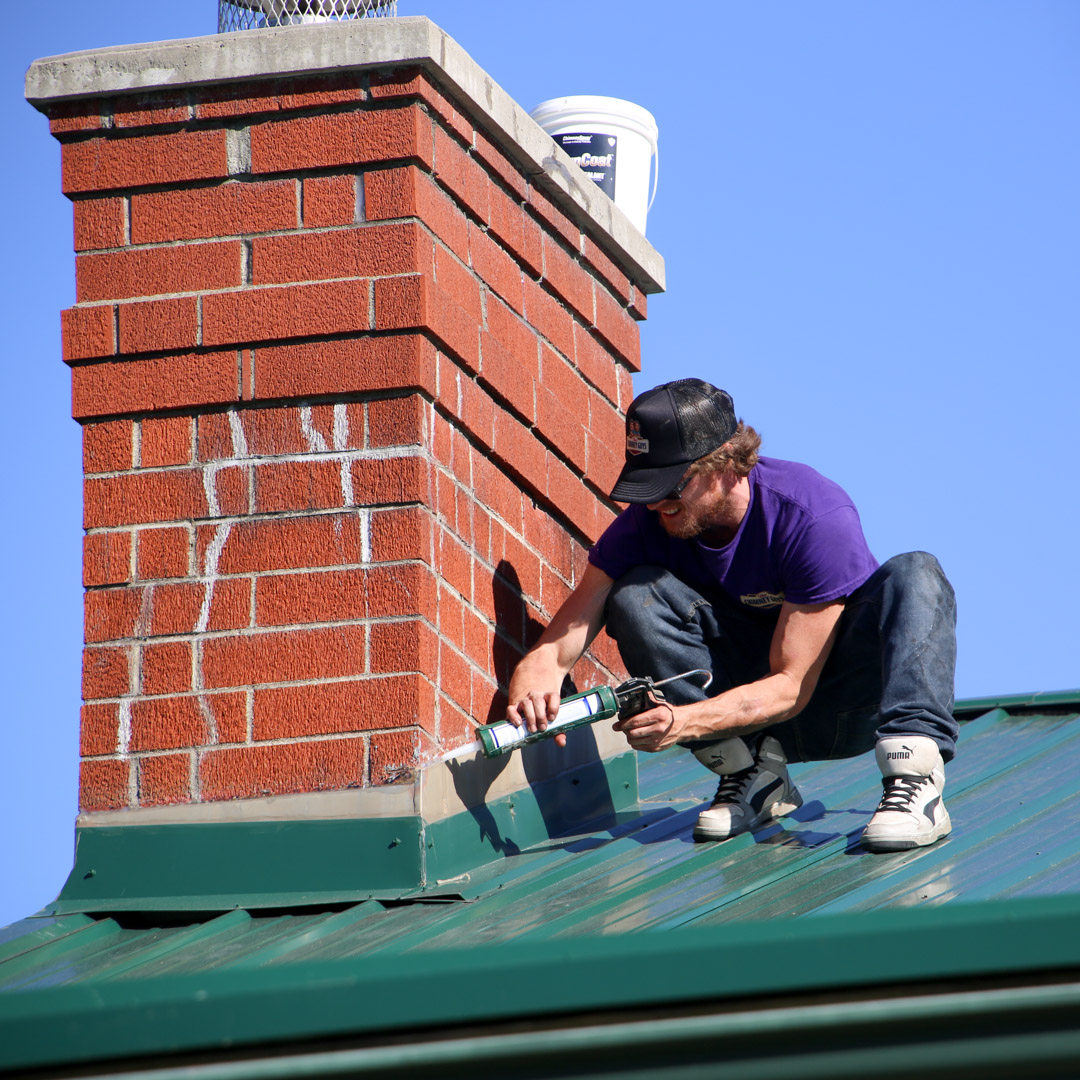
Most freeze-thaw issues start near the top, where water is most likely to seep in, so it’s best if you use binoculars, get up on the roof, or hire a professional to take a closer look.
What You Can Do
The type and extent of the damage will determine which repair method is best. For early-stage issues, repairs may include:
- Tuckpointing to replace deteriorated mortar joints
- Replacing individual damaged bricks
- Repairing or rebuilding the crown
- Installing or repairing a cap to keep water out
For moderate to severe damage, you may have to:
- Partially rebuild the chimney
- Reinforce the structure
- Replace the liner
- Rebuild the whole chimney in severe cases
We’re Here to Save Your Chimney!
The Chimney Guys has proudly served residents throughout Columbus, Licking County, Franklin County, and beyond for over two decades. Whether your chimney needs a little touch-up or a major overhaul, you can trust our certified pros to do the job right the first time. Call us today!